Before You Propose · November 2025 · 10 min read
Why Personalized Proposals Feel More Meaningful Than Beautiful Ones
The difference between a pretty proposal setup and one built from a couple's own story, explained through psychology and anthropology. Why personalization, not decoration, is what people remember.
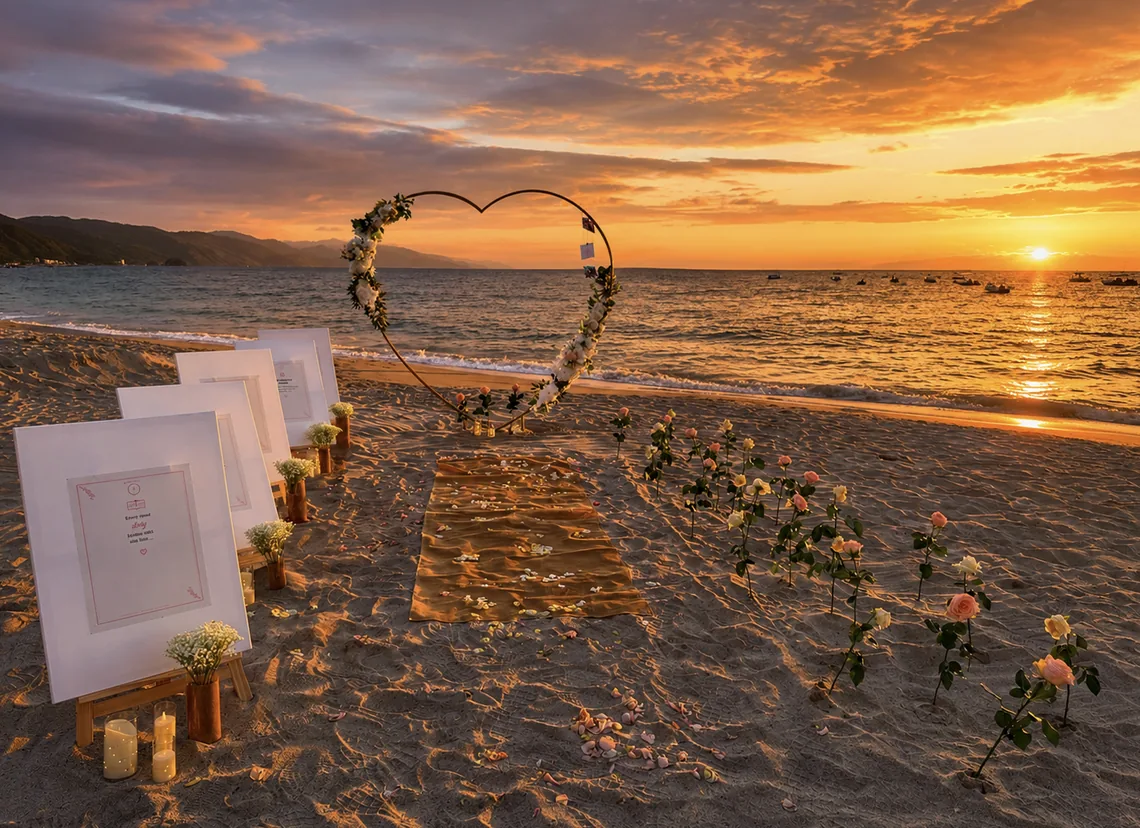
Search "proposal setup" and you'll see thousands of the same image: a heart of rose petals, a row of candles, a "Marry Me" sign in marquee letters, a beach at sunset. They photograph well. They're also, almost all of them, interchangeable. Swap the two people in the picture for any other couple and nothing about the scene would have to change.
That interchangeability is the whole problem, and it's the reason I build proposals differently. After more than a decade doing this in Puerto Vallarta, I've come to believe the thing that makes a proposal land isn't how it looks. It's how specific it is to the two people standing in it. There's real science behind why, and it's worth understanding before you plan the most important question of your life.
We remember experiences, not decorations
Start with one of the most replicated findings in the psychology of happiness. In 2003, psychologists Leaf Van Boven and Thomas Gilovich published research showing what's now called the "experiential advantage": once basic needs are met, people draw more lasting happiness from experiences than from material things (Van Boven and Gilovich, 2003, Journal of Personality and Social Psychology). Across many follow-up studies, the effect has held up. We adapt quickly to objects, and their thrill fades. Experiences keep paying us back through memory.
A proposal that's mostly décor is, in this framing, closer to a material purchase. It's a set of objects arranged in a space. A proposal built as an experience, something the couple moves through, reacts to, and remembers, taps into the kind of spending the research consistently links to deeper and longer-lasting satisfaction. The petals get swept up the same night. The experience gets retold for years.
Experiences become part of who we are
Gilovich and his colleagues identified specific reasons experiences outperform objects, and two of them matter enormously for a proposal.
The first is identity. Research by Carter and Gilovich (2012) found that people feel their experiential purchases are more central to who they are than their material ones. Your possessions sit near you. Your experiences become you. A proposal designed around a couple's actual history, the trip where they met, the inside joke, the song from a specific night, isn't decoration placed beside them. It's a retelling of their identity, handed back to them at the exact moment they decide to merge two identities into one.
The second is social comparison. The same line of research found that experiences provoke fewer of the deflating comparisons that objects invite (Carter and Gilovich, 2010). A bigger ring, a fancier setup, a more expensive venue: these invite measurement against everyone else's. A proposal pulled from your own story can't be ranked against another couple's, because no other couple has that story. It's the one luxury that literally cannot be bought in a larger size.
The anthropology: a proposal is a ritual, and ritual runs on meaning
Step back from psychology and into anthropology, and the picture deepens. A marriage proposal is a rite of passage, one of the formal thresholds anthropologists since Arnold van Gennep (1909) have studied across nearly every human culture: the moments that move a person from one social status to another. What anthropologists consistently observe is that these rituals carry weight not because of how lavish they are, but because of how densely they're loaded with shared meaning. A ritual works when its symbols mean something specific to the people inside it.
This is why a generic setup can feel strangely hollow even when it's objectively gorgeous. The symbols are borrowed. They mean "proposal in general," not "us." A personalized proposal restores what ritual is supposed to do. When the location, the words, and the objects all point to the couple's own history, the ritual stops being a template and becomes theirs, which is precisely the condition under which rites of passage carry their full emotional charge.
Effort is a message the brain reads clearly
There's one more layer, and it's about what the act of personalizing actually communicates. Choosing something generic takes little thought. Building something specific requires you to remember, select, and arrange details that only fit one person. Researchers who study gift-giving describe this investment of attention as a signal: the recipient reads the effort itself as evidence of being known and valued, often more powerfully than they read the object.
A proposal is the highest-stakes version of this signal there is. When a partner realizes that every element was chosen because of them, that someone paid attention closely enough to turn their own life into the setting, the message underneath the question becomes unmistakable: I see you, I have been paying attention this whole time, and I chose you on purpose. No quantity of roses transmits that. Specificity does.
What this looks like in practice
None of this means a personalized proposal can't be beautiful. It means beauty is the surface, not the substance. The setups I build still look striking, but the striking part is never the point. The point is the couple who realizes the route we walked traces their first date, or that the letter being read aloud uses a phrase only the two of them say, or that we ended up in this exact spot because of something that happened to them years ago.
Decoration asks your partner to admire something. A story-driven experience asks them to recognize something, themselves, their history, the shape of their own love reflected back. One is pleasant. The other is the thing people are still describing in detail at their fiftieth anniversary.
The most beautiful proposal in Puerto Vallarta isn't the one with the most flowers. It's the one that could only ever have belonged to you.
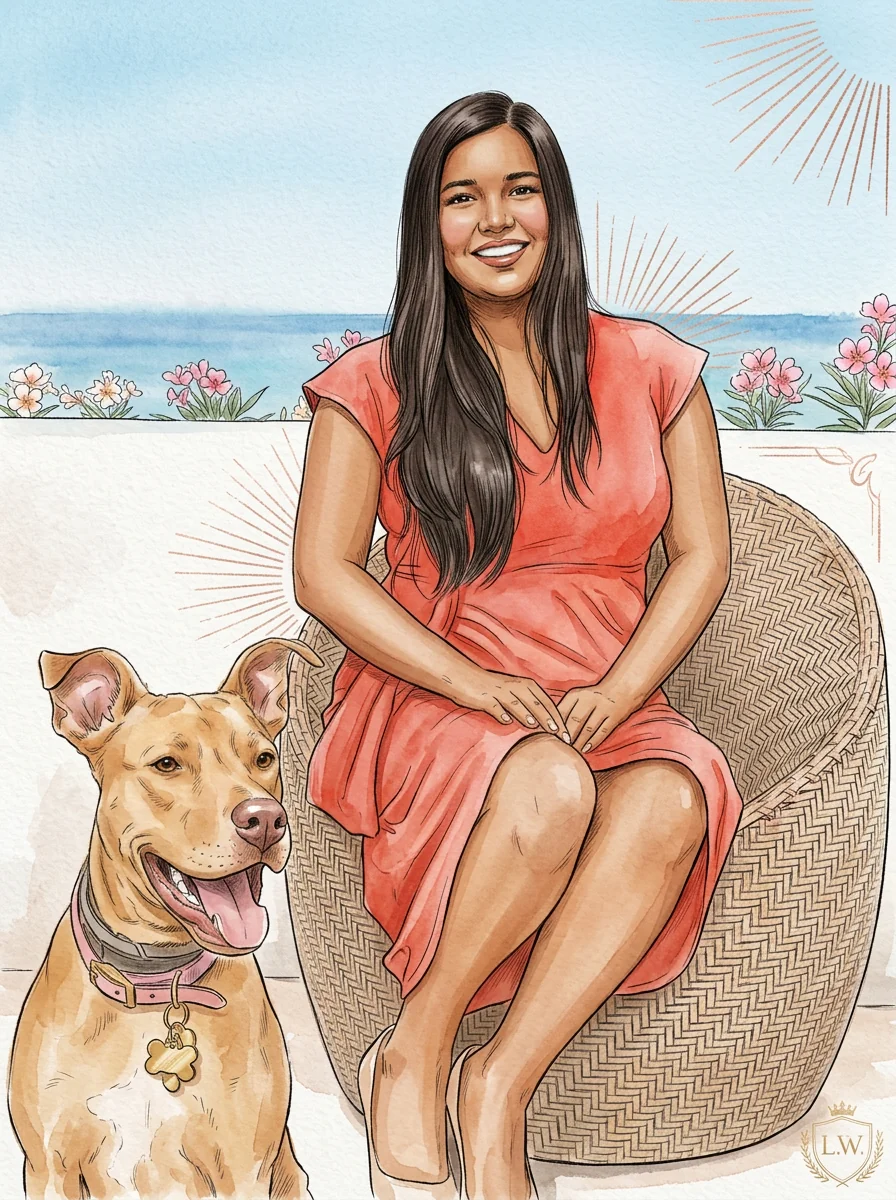
I'm Olivia, and I design story-driven proposals in Puerto Vallarta built entirely from a couple's own history rather than a template. If you want the moment to be unmistakably yours, tell me your story. That's where every proposal I plan begins.
Sources referenced
- Van Gennep, A. (1909). The Rites of Passage. (Rites of passage as status thresholds across cultures.)
- Van Boven, L., & Gilovich, T. (2003). To do or to have? That is the question. Journal of Personality and Social Psychology, 85(6), 1193–1202. (The "experiential advantage.")
- Carter, T. J., & Gilovich, T. (2010). The relative relativity of material and experiential purchases. Journal of Personality and Social Psychology, 98(1), 146–159. (Experiences evoke fewer social comparisons.)
- Carter, T. J., & Gilovich, T. (2012). I am what I do, not what I have: The differential centrality of experiential and material purchases to the self. Journal of Personality and Social Psychology, 102(6), 1304–1317. (Experiences are more central to identity.)
- Gilovich, T., Kumar, A., & Jampol, L. (2015). A wonderful life: Experiential consumption and the pursuit of happiness. Journal of Consumer Psychology. (Review of the three mechanisms behind the experiential advantage.)
Letters from the bay
Proposal ideas, dates that work, and stories from Puerto Vallarta.
One short letter now and then. No spam, and you can leave whenever you want.
Next step
Book a consultation and tell me your story.
A 15 minute call to talk through your dates, your partner, and what you want the moment to feel like.
Read next
Before You Propose · July 2026 · 9 min read
The Seven Questions Before You Propose
Before the ring and the knee, there are seven questions that decide if you're ready. What anthropology and relationship science know about being ready.
Read the post →
Before You Propose · October 2025 · 10 min read
How Travel Shapes Relationships: The Anthropology of Going Somewhere Together
Liminality, Victor Turner's communitas, and the Arons' self-expansion model: what anthropology and relationship science actually say about why a trip can deepen a partnership.
Read the post →
Before You Propose · April 2025 · 9 min read
Is This the One? What Relationship Science Says About Knowing You're Ready to Propose
Forty years of couples research, from John Gottman's Love Lab onward, on the quiet, daily patterns that actually predict whether you're ready to propose.
Read the post →Tell me your story.
Story-driven proposals in Puerto Vallarta, designed around your relationship.
Plan my proposal →