Ideas & Perspective · August 2026 · 10 min read
A Beautiful Proposal Shouldn't Be Interchangeable
What happens when a proposal is designed to look romantic, but says nothing about the relationship?
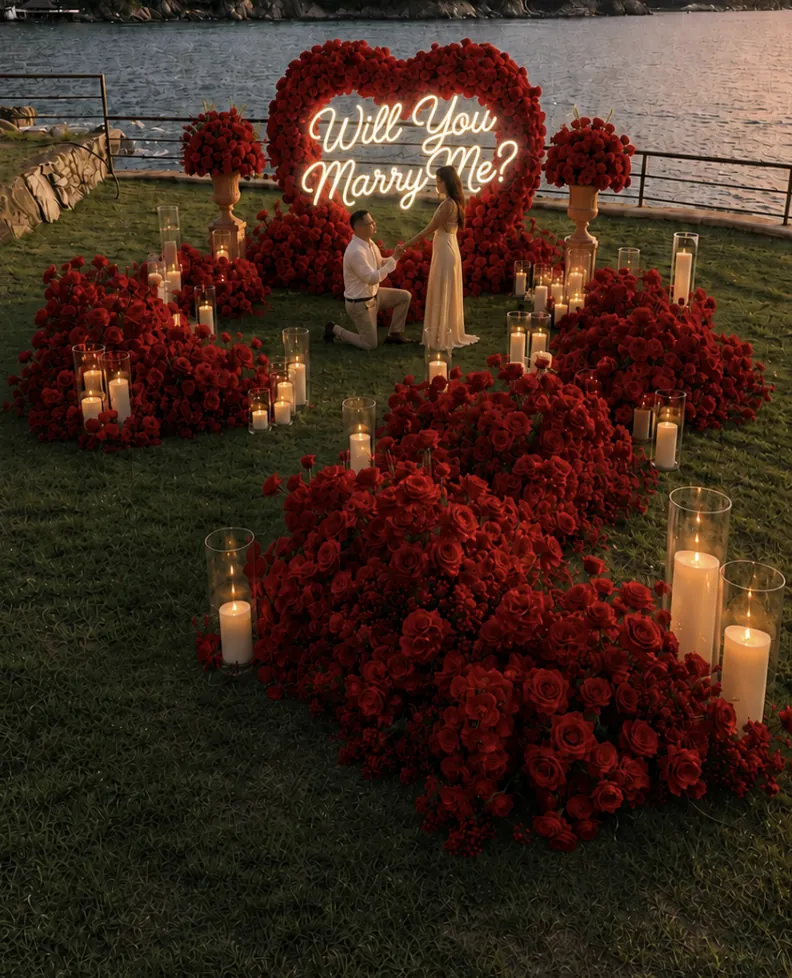
Change the couple. Change the color. Same proposal.
What a proposal signals to an audience, and what it signals about the two people inside it, are not the same measurement.
Change the couple.
Change the flower color.
Keep the same heart, the same candles, the same neon sign, and the same rehearsed photograph.
Would the proposal still make the same sense?
If the answer is yes, it may be striking. But was it built for the people standing inside it, or for the people who will see it afterward?
Marriage proposals keep getting bigger. Floral arches grow. Candle pathways lengthen. Oversized letters, neon signs, musicians, fireworks, and thousands of roses turn one question into a full visual production.
None of that is a problem on its own. Atmosphere matters. A sense of occasion matters.
But between intimacy and spectacle, it is worth separating two things that often get treated as one: what a proposal shows to an audience, and what it says about the relationship. Research suggests these are not the same axis, and confusing them is where a lot of modern proposals lose the plot.
A proposal is a ritual, and rituals are read by other people
From an anthropological view, a proposal is a rite of transition. It marks the moment a couple moves from one understanding of its future into another. Not yet married, no longer only dating. A threshold crossed.
That is why proposals carry recognizable elements: the ring, the question, the kneeling, the surprise, the story told afterward. These make the moment socially legible. People recognize what is happening before anyone explains it.
Here is the part worth sitting with. That legibility is doing work on observers, and it works whether or not the relationship is strong. In one study, couples presented through a traditional proposal script were judged by outsiders as having a stronger relationship, more likely to last, regardless of whether the couple was heterosexual or same sex. The script raised perceived relationship strength on its own, even though it revealed almost nothing about the couple (Cast and Schweingruber, 2022).
Read that again with the grand, camera ready proposal in mind. That script is optimized for exactly one thing the research can measure: how strong the relationship looks to people watching. It is a legitimacy signal aimed outward. It is not evidence about the bond itself, and the study is careful about that gap.
So the honest social framing is not "a big proposal is a red flag." It is narrower and more useful: a big, scriptable proposal is calibrated to an audience, and audience approval is independent from relationship quality. One does not predict the other. When a proposal is designed mostly to score high on the outward signal, that design choice tells you what it was built to do. It does not tell you the relationship is bad. It tells you the relationship was not the thing being measured.
The proposal as performance
Proposals have always had an audience, even if that audience was only relatives who heard the story later.
Now the audience can arrive before the proposal does. The future carousel, the reel, the announcement photo, all of it can shape the design before the moment happens. We picture how it will look from outside before asking how it will feel from inside.
Sociologist Phillip Vannini described the contemporary proposal as a ritual shaped by consumer culture, spectacle, and self presentation. That does not make a photographed or luxurious proposal insincere. It means a proposal can serve two purposes at once: expressing commitment to a partner, and presenting an image of that commitment to an audience (Vannini, "Will You Marry Me?").
Social media sharpens this, because it makes relationships visible, editable, searchable, and persistent. Work on how couples build relationships online found that digital platforms do not just document offline relationships; online and offline practices keep shaping each other (Goldberg, Yeshua-Katz and Marciano, 2022).
We do not only post the moments we live. Sometimes we design the moment around how we expect to post it.
That is the drift worth naming. Not that spectacle is fake, but that the outward facing signal can quietly take over the design, until the proposal is measuring audience reaction instead of the relationship.
More flowers. A bigger sign. A pricier location. A longer pathway. A more dramatic reveal. The visual language says, "this must matter because it is enormous." But size is a measure of production, not of the bond.
What spectacle can measure, and what it cannot
Spectacle is easy to rank. One hundred roses against one thousand. A dinner against a yacht. A quiet question against drones, fireworks, and a live orchestra. All of it is comparable, which is exactly why it travels well on a feed and reads clearly to an audience.
Relationship quality does not rank that way, and the research that actually predicts it points somewhere else entirely. Large studies on what forecasts relationship quality find the signal in the couple's own patterns, things like perceived commitment, appreciation, and how partners treat each other, not in the size of any single gesture (Joel et al., 2020). The grand gesture is simply not on the list of measured predictors, in either direction.
So a thousand roses is not a warning sign and not a good sign. It is off axis. It measures the production. What does line up with a healthy bond is harder to photograph: the song from a first road trip, a voice message from a parent who lives far away, a recreation of the first terrible meal the couple cooked, a reference to a joke no one else would understand.
That produces the real tension. The pressure to show love visibly pushes proposals to become more elaborate while becoming less specific. They look romantic because they use symbols the culture has trained us to read as romantic. But those same symbols can be lifted off one couple, dropped onto another, and say the same thing.
The couple changes. The color changes. The proposal does not.
What personalization signals, and why it is the better signal
A personalized proposal communicates something the outward script cannot fake at scale:
I see you. I remember. I have been paying attention. The life we have built together matters to me.
This is where the psychology lines up with a real relationship rather than an audience. Autobiographical memories are not just stored facts. They serve personal, directive, and social functions, and sharing them builds intimacy, empathy, and social bonds (Vranić, Jelić and Tonković, 2018). The specificity and coherence of those memories is tied to identity: the experiences we remember, and how we connect them, form the story of who we understand ourselves to be (Vanderveren, Bijttebier and Hermans, 2017).
Couples build a version of this together. Over time a relationship grows its own small culture: songs, phrases, places, routines, jokes, traditions. Research on couple rituals describes these as distinctive and personalized practices that build a shared culture and support the bond (Bamford, Vigl and Williamson, 2024).
Notice the difference in what each thing measures. The grand script measures how strong the couple looks to strangers. A proposal built from the couple's own rituals draws on the same material the research ties to actual relationship strength. Personalization is not a nicer aesthetic. It is the version that points inward, at the bond, instead of outward, at the audience.
The effect on the person receiving it does not come from personalization as a feature. It comes from recognition:
This could not have been made for anyone else.
Personal does not mean small, and expensive does not mean impersonal
This is not an argument against luxury. A personal proposal can include thousands of flowers, a private villa, a yacht, live music, an ambitious production. A simple proposal can also be generic if it holds no thought beyond running the expected script.
The line is not expensive versus cheap. It is decoration first versus story first.
Decoration first asks: Which setup do you want? Which flower color? Which neon sign? Which package? Which photo would you like to reproduce?
Story first asks: How did you meet? When did you realize this was different? Which places shaped you? What does your partner miss? What makes them laugh? Who helped you get here? What future do you picture together? What would make your partner feel understood, not just impressed?
The final experience can still be visually large. The difference is that the beauty now has something to say, and what it says points at the two of them.
The danger is not repetition. It is emptiness.
No proposal has to be original to matter. Kneeling has been done. Roses have been given. Candles, music, and sunsets belong to millions of love stories. Originality for its own sake is just another performance aimed at an audience.
What matters is not whether anyone has used the object before. It is why the object is here.
Maybe roses are your partner's favorite. Maybe a neon phrase repeats something one of you said years ago. Maybe the beach is where you first traveled together. Maybe the song was already part of your life long before it became part of the proposal.
A familiar symbol turns personal when it connects to a real memory, preference, or intention. The goal is not a proposal that has never visually existed. It is a proposal that could not emotionally belong to another couple.
There are companies for ready made décor, and that is fine
Some people want a floral heart, a "Will You Marry Me?" sign, a candle pathway, and a photographer at the end. Many décor companies build those setups well and efficiently, with recognizable packages and predictable visuals. That is a valid choice.
It is simply not what we do.
Puerto Vallarta Proposals is not a décor rental company. We design and plan full proposal experiences around the people living them.
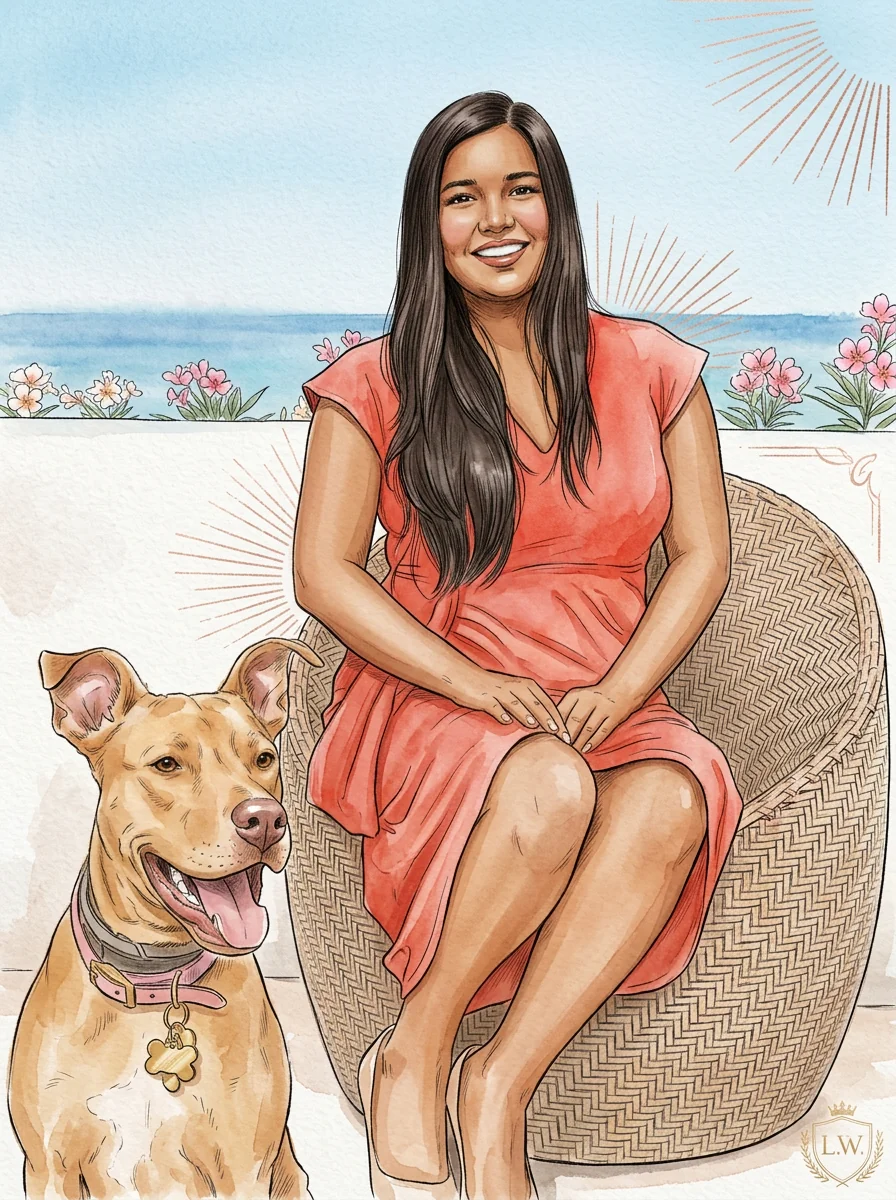
I'm Olivia, and I start with a conversation, not a catalog. I learn the story before choosing the setting, the memories before designing the details. Flowers, candles, photography, and light build the visual world, but they are not the center. The relationship is.
Personal details might take the form of photographs, handwritten memories, custom passport stamps, voice messages, family participation, a specific song, a path through the couple's past, or a glimpse of the future they have pictured. Sometimes the result is quiet and intimate. Sometimes it is immersive and cinematic. Either way, the experience should answer one question: why does every detail belong to these two people?
A proposal should be beautiful from the inside
A photograph preserves how a proposal looked. Memory preserves how it felt.
Years later, the rose count fades. The exact candle arrangement fades. Trends move on, and today's most recognizable proposal style will be replaced by another. What people remember is the feeling of being known. Recognizing the restaurant from their first date. Hearing a parent's voice. Finding a forgotten photograph. Realizing an offhand comment from years ago had been carefully kept.
That is the difference between being surrounded by romance and standing inside your own love story.
The most meaningful proposal is not the largest, the most expensive, or the most original. It is the one that says:
I know who you are. I know what we have lived. I know what this means. And I choose the future we have imagined together.
Flowers make a proposal beautiful. A story gives it a heart.
Ready to create something that could only belong to you?
Tell me how you met, what your partner loves, and how you want the moment to feel. I will help you turn your story into a proposal experience designed and planned from start to finish in Puerto Vallarta.
You bring the ring. I bring your story to life.
Letters from the bay
Proposal ideas, dates that work, and stories from Puerto Vallarta.
One short letter now and then. No spam, and you can leave whenever you want.
Next step
Book a consultation and tell me your story.
A 15 minute call to talk through your dates, your partner, and what you want the moment to feel like.
Read next
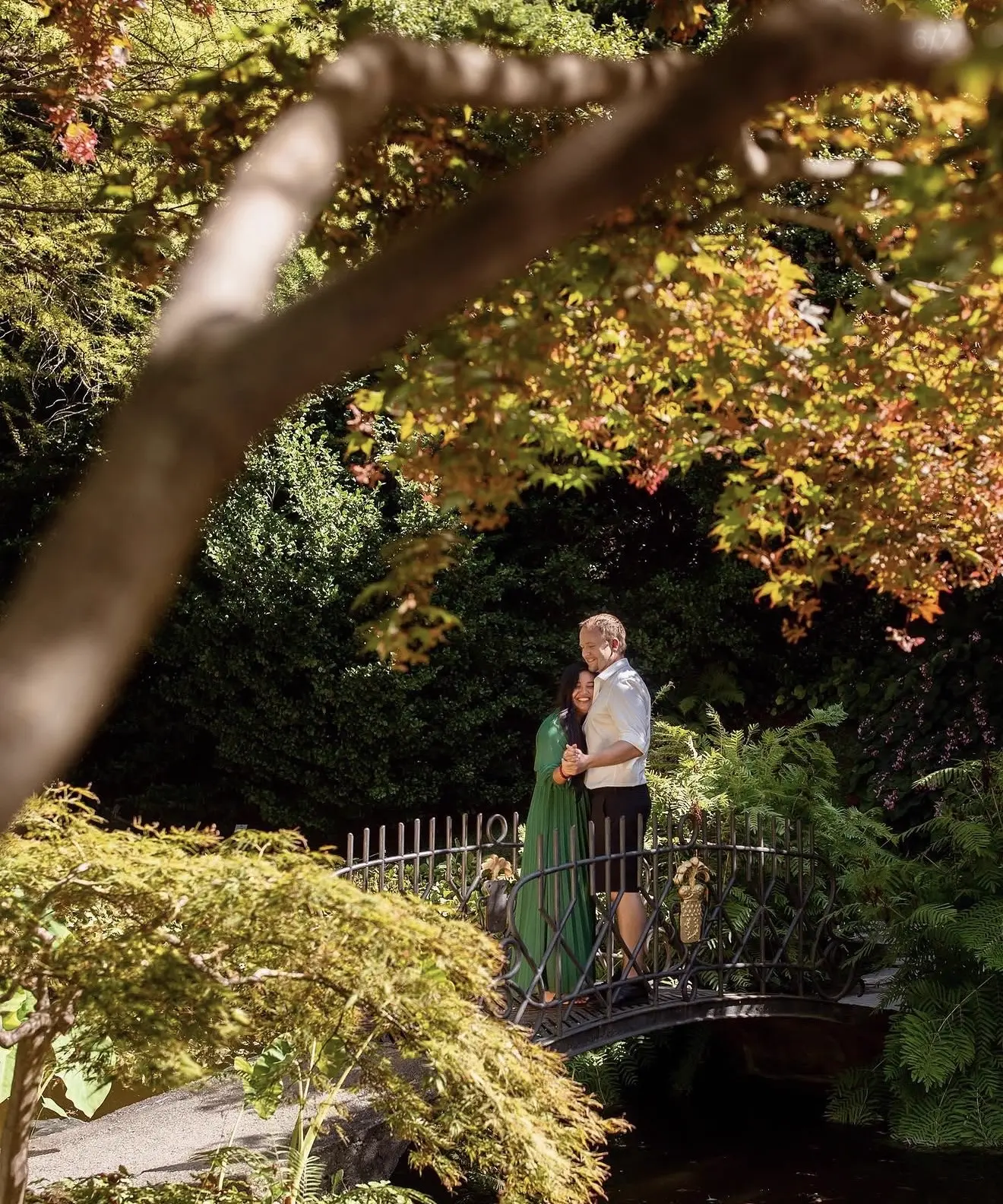
Before You Propose · July 2026 · 9 min read
The Seven Questions Before You Propose
Before the ring and the knee, there are seven questions that decide if you're ready. What anthropology and relationship science know about being ready.
Read the post →
Planning Your Proposal · May 2026 · 7 min read
Planning an LGBTQ+ Proposal in Puerto Vallarta: Why It's One of the Best Places to Do It
You want somewhere beautiful, yes. But you also want somewhere you can hold hands walking to the moment and celebrate openly without a single glance over your shoulder.
Read the post →
Planning Your Proposal · April 2026 · 7 min read
The Best Time to Propose in Puerto Vallarta (A Local's Honest Guide)
You've chosen Puerto Vallarta. Now comes a question that matters more than most people realize: when? The month you pick shapes the weather, the light, the crowds, even the price.
Read the post →Tell me your story.
Story-driven proposals in Puerto Vallarta, designed around your relationship.
Plan my proposal →